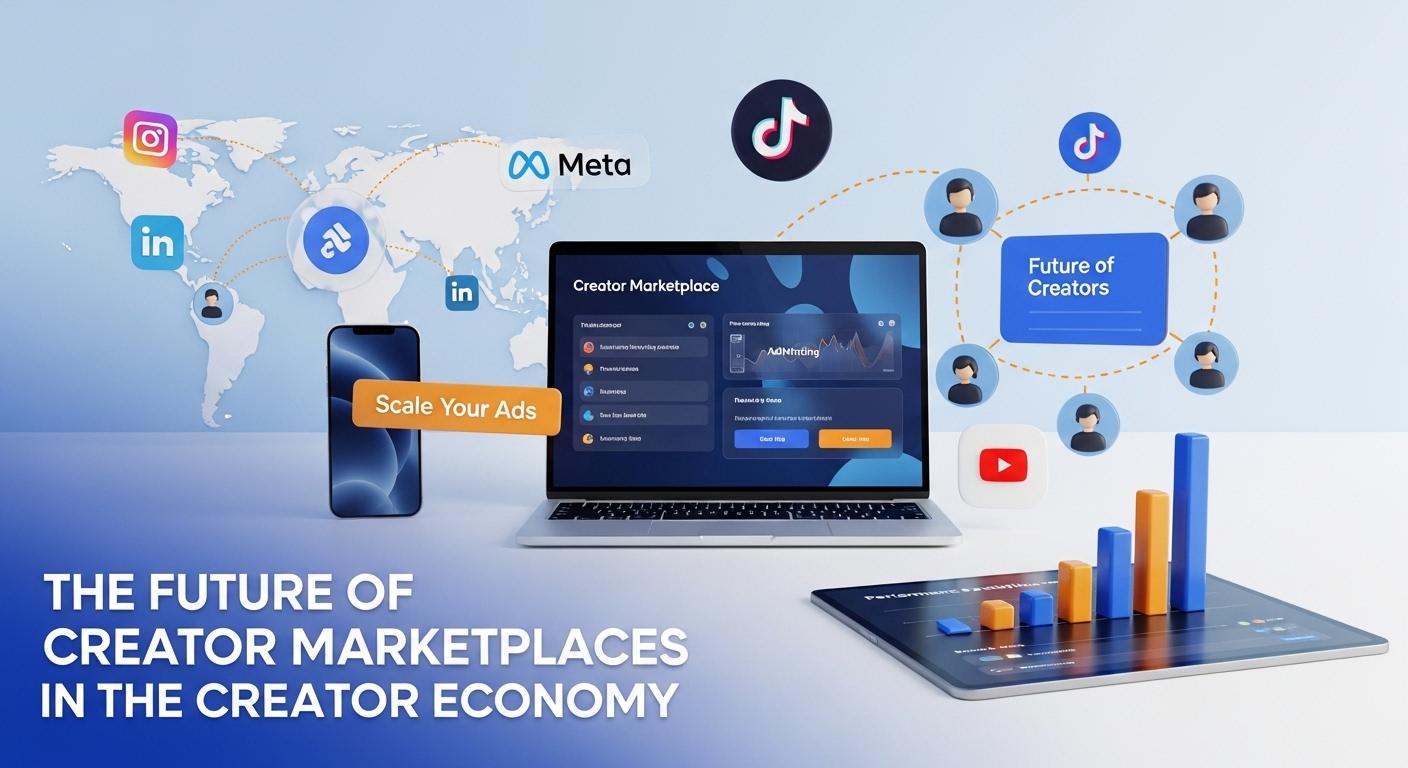
The Future of Creator Marketplaces in the Creator Economy
Chukwunyere Ebube
April 23, 2026
The Future of Creator Marketplaces in the Creator Economy
Imagine waking up one morning in Lagos, recording a ten-minute video about skincare routines from your bedroom studio, and having a global beauty brand reach out to you by noon, not through a middleman or a cold email, but through a smart digital platform that matched your audience data to the brand's campaign goals in real time. This is no longer a dream. It is the everyday reality that creator marketplaces are building across the world, and the momentum is only picking up.
The creator economy, the vast, fast-moving ecosystem of content creators, influencers, streamers, podcasters, and digital entrepreneurs who earn income from their online audiences is one of the most exciting economic forces of our time. According to Precedence Research (2026), the global creator economy market was valued at approximately $254.4 billion in 2025 and is projected to surge to nearly $2.08 trillion by 2035, expanding at a compound annual growth rate (CAGR) of 23.41%. Within this landscape, creator marketplaces are emerging as the essential infrastructure connecting creators with brands, tools, and audiences at scale.
In this post, we are going to break down exactly what creator marketplaces are, why they matter in 2026 and beyond, what key trends are shaping their future, and most importantly, what this means for creators and brands in Nigeria and across Africa. Whether you are a content creator looking for monetisation opportunities or a brand trying to find the right voices to amplify your message, this article is for you.
A Story That Puts It All in Perspective
Let us travel back to 2019 for a moment. A young food creator in Abuja had amassed over 80,000 followers on Instagram. She consistently produced beautiful content, engaged deeply with her community, and had clear brand potential. But when a fast-moving consumer goods (FMCG) brand wanted to run an influencer campaign, they bypassed her entirely, not because her content was poor, but because there was no easy way for the brand's marketing team to find, vet, and contract her. The entire influencer discovery and collaboration process was manual, slow, and relationship-dependent.
Fast-forward to 2026. That same creator, armed with a verified profile on a creator marketplace, now receives inbound collaboration requests monthly. Her audience demographics, engagement rate, past brand partnerships, and content performance metrics are all visible to interested brands at a glance. The friction is gone. The opportunity is wide open. This is the transformation that creator marketplaces are delivering right now and the shift is only deepening as technology, trust, and infrastructure mature together.
By the end of this post, you will understand what creator marketplaces are and why they are reshaping digital marketing, the key global and African trends defining their future, what both creators and brands need to do to thrive in this new landscape, and how platforms like Adminting are helping bridge the gap in the Nigerian and African creator economy.
So, how exactly are creator marketplaces changing the rules of the creator economy and what does their future really look like in 2026 and beyond? Let's dive in.

What Is a Creator Marketplace — and Why Does It Matter?
A creator marketplace is a digital platform that connects content creators and influencers with brands, businesses, and advertisers seeking to run marketing campaigns, produce content, or build long-term partnerships. Think of it as a talent marketplace similar to how Upwork or Fiverr connects freelancers with clients but specifically designed for the creator economy.
What makes creator marketplaces particularly powerful is the layer of data and technology they bring to a relationship that was previously built on gut feelings, personal networks, and guesswork. On a modern creator marketplace, brands can search for creators by niche, location, audience size, platform, engagement rate, and even psychographic data. Creators, on the other hand, gain direct access to brands, structured briefs, transparent pricing, and often tools to manage contracts, track deliverables, and receive payments.
This matters enormously because it democratises access. A nano-influencer in Kano with 4,000 highly engaged followers can now compete for brand deals on the same platform as a macro-influencer with 500,000 followers, as long as their audience quality and niche alignment justify it. For brands, it removes the bottleneck of relying solely on agencies or personal contacts to find the right creative voices.
The Three Core Functions of a Creator Marketplace
Discovery
Discovery is the first and most fundamental function. Creator marketplaces make it possible for brands to find the right creators efficiently using filters, AI-powered recommendations, and verified data. Without this, brands waste enormous time and money on mismatched partnerships.
Collaboration management
Collaboration management is the second pillar. Beyond discovery, the best platforms provide workflow tools, campaign briefs, content approval systems, messaging, and milestone tracking all within one interface. This removes the back-and-forth chaos of email threads and scattered communication.
Payment and monetisation systems
Payment and monetisation infrastructure is the third leg. For creators, especially in markets like Nigeria where international payment rails are historically complicated, getting paid efficiently and reliably is a major pain point. Creator marketplaces that solve this problem through mobile money integrations, localised wallets, or payment splits are winning the loyalty of African creators at speed.
Key Global Trends Defining the Future of Creator Marketplaces
1. AI-Powered Creator-Brand Matching
One of the most consequential shifts happening across creator marketplaces globally is the integration of artificial intelligence into the creator-brand matching process. Rather than relying on keyword searches or category tags, next-generation platforms are using machine learning models that analyse thousands of data points, audience sentiment, posting frequency, content quality scores, past campaign outcomes, brand affinity signals to recommend creators that are most likely to deliver meaningful results for a specific campaign.
This is a significant leap forward because it moves creator marketing from an art to a science. According to the State of Creator Marketing Report 2025-2026 by CreatorIQ, average annual influencer marketing budgets have grown 171% year-over-year, with 71% of organisations increasing their investment. As budgets grow, so does the pressure to demonstrate ROI and AI-powered matching is one of the clearest pathways to proving it.
2. The Rise of Performance-Based Deals
For years, influencer marketing was largely a pay-for-post model: a creator receives a flat fee to post branded content, regardless of how that content actually performs. The future of creator marketplaces is rapidly shifting toward performance-based and hybrid compensation structures.
In this new model, creators may receive a base fee plus performance bonuses tied to specific outcomes such as clicks, conversions, new signups, or sales tracked through unique affiliate links or discount codes. This alignment of incentives benefits both parties. Brands pay more confidently when results are measurable, and creators have a clear pathway to earning more by creating better, more effective content. According to the IAB, U.S. creator economy ad spend is forecast to reach $43.9 billion in 2026, with a significant portion flowing through paid amplification, a structure that creator marketplaces are perfectly positioned to facilitate.
3. The Consolidation Wave: M&A Activity Is Reshaping the Landscape
The creator marketplace space is not just growing, — it is consolidating. According to the 2026 Creator Economy M&A Report by New Economies, deal volume in the creator economy increased 17.4% year-over-year, from 69 transactions in 2024 to 81 in 2025. Landmark deals such as Later acquiring Mavely and Publicis acquiring Captiv8 signal that large advertisers and technology companies are making aggressive bets on creator economy infrastructure.
What does this mean for the future? Consolidation tends to produce more sophisticated, better-resourced platforms with broader creator networks, better analytics, and more robust compliance infrastructure. It also means smaller, independent platforms need to find their competitive differentiation fast and for many in Africa, that differentiation is local market knowledge, language, and cultural context.
4. Multi-Platform Creator Strategies
Gone are the days when a creator could build a sustainable business on a single platform. Today's most commercially successful creators distribute content across multiple channels, Instagram for visual storytelling, YouTube for long-form depth, TikTok for discovery and virality, and Substack or a podcast for owned-audience monetisation. Creator marketplaces of the future will need to reflect this multi-platform reality, offering brands unified campaign management across platforms and giving creators consolidated analytics dashboards.
According to Epidemic Sound's Future of the Creator Economy Report (2025), 45% of full and part-time creators plan to expand to YouTube, while 41% plan to expand into both Instagram and TikTok simultaneously. Creator marketplaces that only operate within one platform's ecosystem will find themselves at a disadvantage as this multi-channel model matures.
5. The Authenticity Premium
As audiences grow more sophisticated, they are becoming harder to fool. Sponsored content that feels scripted or inauthentic is increasingly scrolled past, leading to poor performance for brands. This is driving a fundamental revaluation of what "good" creator marketing looks like. Brands are learning to give creators more creative freedom and the most forward-thinking creator marketplaces are building this into their briefing templates and approval workflows.
A 2026 analysis from African Business Innovation, referencing Penquin agency, found that campaigns where creators were given space to tell brand stories in their own voice consistently outperformed those with rigid, brand-controlled scripts. For creator marketplaces, this means building features that facilitate collaboration rather than just transaction spaces where brands and creators can co-develop concepts, iterate on ideas, and build genuine creative chemistry.
The African Creator Marketplace Story: From "Influence Without Income" to Billion-Dollar Opportunity
If you want to understand the future of creator marketplaces at a global scale, Africa and Nigeria in particular is one of the most compelling places to look. For a long time, African creators occupied a paradox: they were producing some of the world's most engaging content, driving culture and conversation across Afrobeats, comedy, fashion, and beauty, yet they were structurally excluded from the monetisation systems that rewarded their creativity.
That era is officially over. According to Afrikan Insights (2026), the African creator economy was valued at approximately $5.1 billion in 2025 and is projected to reach nearly $29.8 billion by 2032, growing at around 28.7% annually. Influencer spending across Africa is growing by roughly 25% per year as marketers shift budgets from traditional channels to creator-led campaigns.
Nigeria as the Epicentre
Nigeria sits at the heart of this African creator economy boom. With a youthful, digitally-active population, high social media penetration, and a culture that has proven its global export value through Afrobeats, Nollywood, and digital fashion, Nigeria offers creator marketplaces an extraordinary opportunity.
According to data cited by Contemeleon (2026), TikTok alone has 6.3 million creators in Nigeria with over 1,000 followers a massive talent pool that is increasingly demanding proper monetisation infrastructure. Facebook remains the dominant social platform in Africa, holding an 84.72% market share as of December 2025, but TikTok and Instagram are rapidly closing the gap among younger demographics.
Platforms like Adminting Ltd, Trendupp Africa, Creator Gigs Africa, Diglancers, and Wowzi are building the creator marketplace infrastructure that connects Nigerian and broader African creators with brands in a structured, data-driven way. These platforms understand local nuances — from payment preferences and language diversity to the importance of regional micro-cultures in ways that global platforms often miss.
The Language and Culture Advantage
One of the most important lessons emerging from the African creator economy is that cultural specificity is not a limitation, it is a superpower. A YouTube campaign run in Nigeria that used content in Hausa, Yoruba, Pidgin, Igbo, and English simultaneously generated brand recall increases of 9.6% in Nigeria, according to data shared by Nex Media (2025). This kind of culturally tuned content cannot be templated from a global headquarters. It requires local creators, local insights, and local marketplaces that understand the terrain.
For creator marketplaces operating in Africa, this means that investing in multilingual platform interfaces, region-specific creator categorisation, and culturally intelligent campaign tools is not a nice-to-have, it is the core product.
The Payment Infrastructure Challenge and Opportunity
Perhaps the single biggest structural barrier for African creators participating in the global creator marketplace ecosystem has been payment. Many global platforms either do not support Nigerian or Ghanaian payment methods, or they impose withdrawal minimums and international transfer fees that eat into a creator's earnings significantly.
The future of African creator marketplaces lies in solving this problem definitively. This kind of localised payment thinking is what will distinguish the creator marketplaces that win in Africa from those that merely participate.
What Creator Marketplaces Will Look Like in 2030: Emerging Capabilities
Social Commerce Integration
Social commerce, the ability to buy products directly within a social media post or live stream is set to become one of the primary commercial functions of creator marketplaces. According to the State of Creator Economy in Africa report by Contemeleon, social commerce in Africa is projected to generate $4.45 billion in 2025 alone. Creator marketplaces that integrate direct shopping capabilities will close the loop between inspiration and purchase, making it possible to measure and attribute sales to specific creator content.
In Ghana and Morocco, micro-fashion brands are already selling up to 80% of their collections through Instagram Live auctions. Creator marketplaces that can host, manage, and track these live shopping events, providing brands with real-time sales attribution will be extraordinarily valuable in the next five years.
Creator-Owned Products and Brand Building
The creator economy is maturing beyond the influencer-for-hire model. Increasingly, the most successful creators are launching their own product lines, media companies, and consumer brands. Rhode Skin, the beauty brand founded by a creator, was acquired by E.L.F Beauty in a landmark $1 billion deal in 2025, a signal that creator-built brands are legitimate, scalable business assets.
Creator marketplaces of the future will need to evolve alongside this trend. Rather than simply connecting creators with external brands, the most advanced platforms will provide creators with tools to launch and manage their own product sales, merchandise stores, and subscription communities all within a unified ecosystem. This turns the marketplace from a matchmaking tool into a full-stack business operating system for the modern creator.
Data Transparency and Creator Rights
One of the critical conversations happening in the creator economy right now is around who owns the data, audience data, content performance data, and demographic insights and how that data is shared between creators, platforms, and brands. As creator marketplaces mature, we will see increased pressure on platforms to offer creators transparent access to their own data, fair licensing terms for their content, and clear standards around intellectual property.
In October 2025, several platforms introduced enhanced copyright protection, digital asset management, and licensing tools to safeguard creators' intellectual property rights, according to OpenPR Research (2026). This is just the beginning. As creators become more commercially sophisticated, creator marketplaces that prioritise creator rights and data transparency will attract and retain the best talent.
But What About Creators Who Are Just Starting Out? Is There Space for Them?
This is one of the most important questions we hear from young creators in Nigeria and across Africa and the answer is a resounding yes, with some important caveats.
Creator marketplaces are actually most transformative for smaller, emerging creators because they remove the need for an existing personal brand or industry connections to access brand deals. A nano-influencer with 3,000 to 10,000 highly engaged followers in a specific niche can now compete on merit, not on follower count alone. In fact, according to the 2026 State of Influencer Marketing report by Linqia (cited by Digiday), 58% of marketers are planning to work with nano-influencers (up to 5,000 followers) in 2026. That is not a marginal interest, it is a mainstream strategy.
The key for emerging creators is threefold. First, niche specificity matters more than follower volume. A creator with 5,000 followers who speaks directly and authentically to a specific community, say, Nigerian Muslim women in fashion, or Lagos-based fitness enthusiasts — will always outperform a generalist creator with 50,000 disengaged followers on a brand campaign targeting that specific group.
Second, engagement quality is the currency that creator marketplaces measure most seriously. Brands and platforms are now using fraud detection tools to filter out accounts with inflated follower counts or artificially boosted engagement. According to Contemeleon (2026), fake followers cost brands $1.3 billion annually, with approximately 15% to 30% of an influencer's followers estimated to be bots on some accounts. Clean, authentic engagement is not just ethically right, it is commercially essential.
Third, professional conduct on a marketplace makes a difference. Creators who complete their profiles thoroughly, respond to briefs promptly, deliver content on time, and treat brand relationships professionally will consistently receive more opportunities. Creator marketplaces are meritocratic by design and they reward reliability and quality.
How Adminting Is Participating in This Creator Economy Shift
At Adminting, we understand that the gap between talented creators and brands willing to pay for their influence is not just a technology problem, it is also a trust, discovery, and access problem. Our platform is designed to bring brands and promoters together in a structured, performance-focused environment that reflects the realities of the Nigerian and African digital market.
We believe that every creator, from a nano-influencer in Enugu to a macro content creator in Lagos, deserves access to brand partnerships that are fairly priced, professionally managed, and performance-tracked. And every brand, from a startup in Port Harcourt to a multinational running African campaigns, deserves to find the right creative voice without the friction, guesswork, and wasted budget that has historically defined influencer marketing on the continent.
This is why we are building not just a marketplace, but an ecosystem, one where advertisers can post campaigns with precision targeting, and promoters can discover opportunities aligned with their content niche and audience profile. If you are ready to be part of this future, we invite you to join us. Check us at Adminting.com
Conclusion
The creator economy is not a trend, it is a structural shift in how media, marketing, and commerce work. And at the centre of this shift are creator marketplaces: platforms that are turning the chaotic, relationship-dependent world of influencer marketing into a scalable, data-driven, and increasingly democratised ecosystem.
We have explored how AI-powered matching, performance-based deals, social commerce integration, and multi-platform strategies are reshaping what creator marketplaces can do globally. We have also looked closely at the African opportunity, the $29.8 billion projected market, the 6.3 million Nigerian TikTok creators, the cultural authenticity advantage, and the payment infrastructure evolution that is finally unlocking monetisation for African creators at scale.
The creator marketplaces that will win in the next decade are those that combine technological sophistication with cultural intelligence, that put creator rights and fair compensation at their core, and that build the trust and transparency that both creators and brands need to commit to long-term partnerships.
Whether you are a creator ready to monetise your influence or a brand looking to connect with authentic voices that move your audience, the creator marketplace revolution is your opportunity. Do not sit on the sidelines while the creator economy rewrites the rules of commerce.
Visit Adminting.com today to be part of the creator economy's next chapter. Sign up as an advertiser to connect your brand with the right creators, or join as a promoter to start earning from your influence on your terms, with real support behind you.
FAQ
Q1: What is a creator marketplace and how is it different from an influencer marketing agency?
A creator marketplace is a self-service or semi-automated platform where brands and creators can discover each other, initiate collaborations, manage campaigns, and process payments — all within one digital environment. An influencer marketing agency, by contrast, is typically a human-led service where a team manages the entire process on behalf of a brand. Marketplaces offer greater transparency, speed, and control, while agencies offer more personalised strategy and execution support.
Q2: Can small creators in Nigeria access creator marketplace opportunities?
Absolutely. Many creator marketplaces actively seek nano and micro-influencers because their audiences tend to be highly engaged and niche-specific. Brands increasingly value a creator with 5,000 hyper-engaged followers in a specific community over a mass-market account with low engagement. What matters most is audience quality, niche clarity, and professional conduct on the platform.
Q3: How does AI improve creator-brand matching on modern marketplaces?
AI improves matching by analysing thousands of data points beyond follower count — including audience demographics, sentiment analysis of comments, posting frequency, historical campaign performance, brand affinity signals, and content quality scores. The result is a recommendation that is far more likely to produce meaningful campaign results than a manual search or gut-feeling selection.
Q4: What are the biggest challenges facing creator marketplaces in Africa?
The key challenges include fragmented payment infrastructure (making it difficult for creators to receive earnings reliably), fake follower fraud (which undermines brand confidence), limited data infrastructure for tracking campaign performance in real time, and the need for multilingual, culturally adapted platform experiences across a continent with enormous linguistic and cultural diversity.
References
- Precedence Research (January 2026). Creator Economy Market Size, Share and Forecast 2026–2035.
- New Economies (January 2026). 2026 Creator Economy M&A Report.
- CreatorIQ (2025–2026). The State of Creator Marketing Report 2025–2026.
- Digiday (December 2025). In Graphic Detail: Here's What the Creator Economy Is Expected to Look Like in 2026.
- Afrikan Insights (January 2026). Africa's Creator Economy and Influence Commerce Is Maturing Fast.
- Contemeleon (January 2026). The State of the Creator Economy in Africa: Data, Trends, and the Road to $30 Billion.
- Nex Media (May 2025). Why Africa's Creator Economy Is the Next Global Marketing Frontier.
- African Business Innovation (April 2026). Why Influencer Marketing Budgets Are Shifting Back to Authentic Creator-Led Content in 2026.
- Yahoo Finance / SharkPlatform (March 2026). Creator Economy Statistics 2026: 120+ Data Points Every Marketer Should Know.
- OpenPR / DataM Intelligence (March 2026). Future of the Creator Economy Market 2026 Report.
Recommendation
If you found this post valuable, here are some related topics and resources you may want to explore next to deepen your understanding of the creator economy and digital marketing landscape.
- Top Influencer Marketing Trends You Need to Know in 2026 — Explore how influencer marketing tactics are evolving alongside creator marketplaces.
- How Micro-Influencers Are Driving Better ROI for Brands in Nigeria — A deep dive into why smaller creators are increasingly valuable for performance marketing.
- Social Commerce in Africa: The Next Frontier for Creator Monetisation — Understand how TikTok Shop, Instagram Live selling, and WhatsApp commerce are reshaping creator revenue.
- How to Set Up a Winning Creator Profile on a Marketplace — A practical guide for creators in Nigeria ready to start attracting brand deals.
- Adminting's Creator Economy Hub at adminting.com — Our resource centre for brands and creators navigating the African digital marketing landscape.
Ready to grow? Visit Adminting.com to sign up as an advertiser or promoter today. Let us help you find your place in the future of the creator economy — whether you are building a brand or building an audience.