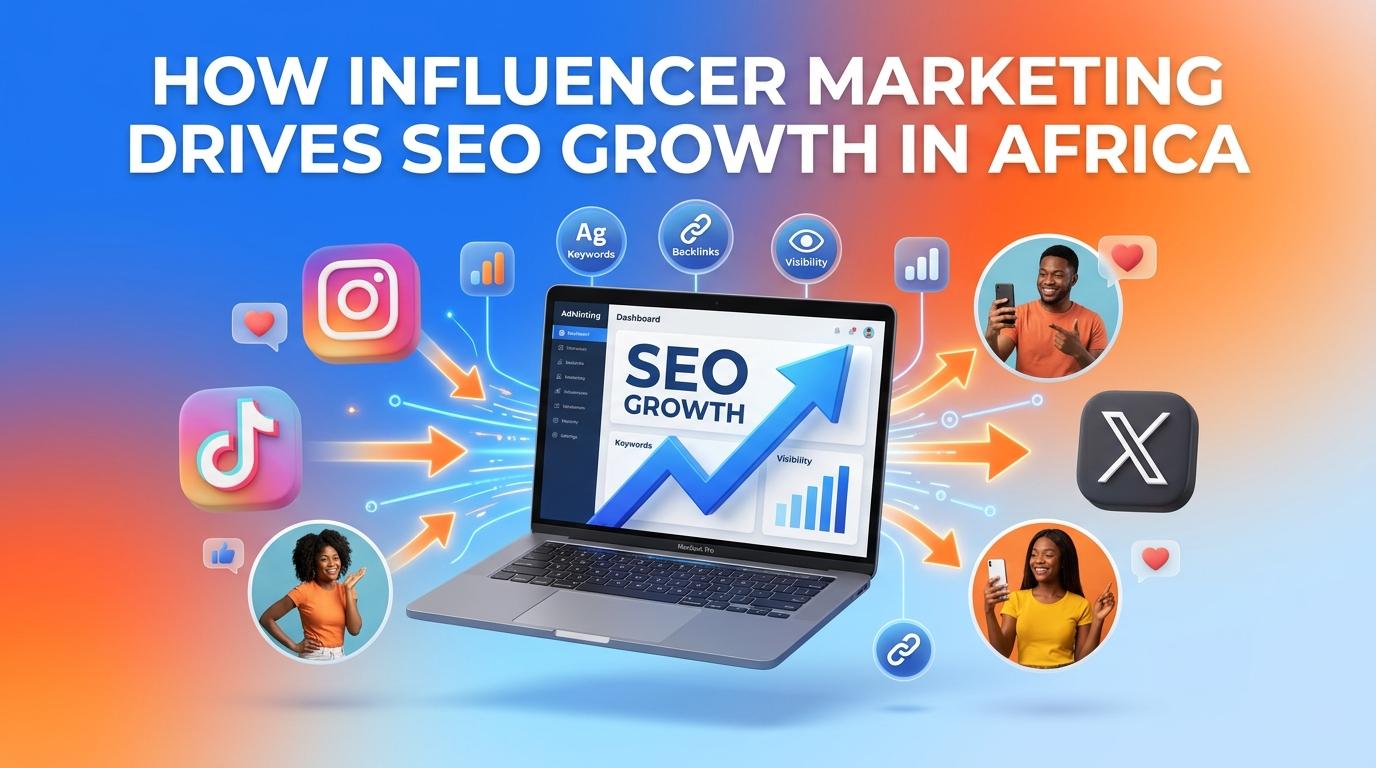
How Influencer Marketing Drives SEO Growth in Africa

Chukwunyere Ebube
October 31, 2026
How Influencer Marketing Drives SEO Growth
Did you know that over 87% of global digital marketing executives expect their creator marketing budgets to increase significantly in 2026, pushing the global influencer ecosystem well beyond $40 billion? Yet, despite this massive financial deployment, a surprising majority of brand builders in Nigeria, Kenya, South Africa, and across the African continent still treat influencer marketing and search engine optimization (SEO) as two completely isolated operating silos.
If your growth team treats creator partnerships merely as a temporary visual campaign on social feeds while relying solely on manual meta tag tweaks for organic search rankings, you are missing out on incredible compounding traffic gains.
In today’s hyper-competitive digital ecosystem, winning top-tier search visibility requires far more than basic keyword insertion; it demands genuine, creator-led digital footprints that feed Google’s modern algorithms with real trust signals. Consequently, bridging social distribution with search performance is the ultimate competitive advantage for growth-stage brands.
Let’s explore how strategic influencer activations directly accelerate your website’s organic ranking velocity, build authoritative link profiles, and turn creator buzz into permanent search engine dominance.
To understand how these two worlds collide, let’s look at two competing digital consumer apps launched in Yaba, Lagos: Brand A and Brand B. Both platforms raised similar seed funding, targeted urban African millennials, and possessed sleek product interfaces.
Brand A took the traditional digital marketing path. They hired a specialized technical SEO agency that spent six months producing standard 800-word blog articles targeting terms like "best virtual dollar card in Nigeria." They built generic directory backlinks and bought sponsored PR articles on low-tier news outlets.
Meanwhile, their paid acquisition team burned millions of Naira on short-term Meta feed ads. The moment their paid budget was paused, traffic crashed back to zero. Their domain authority hovered at an unremarkable rank because search crawlers detected zero organic entity validation across the broader web.
Brand B, on the other hand, partnered with AdMinting to deploy a hybrid social-search strategy. Instead of relying strictly on traditional ads, they activated 25 micro-creators, tech bloggers, and personal finance YouTubers across Lagos, Abuja, and Nairobi. These creators did not just post 15-second dancing TikToks; they published comprehensive video walkthroughs, wrote detailed product reviews on their personalSubstack publications and self-hosted tech blogs, and initiated lively discussions on X (Twitter) and Reddit.
Within ninety days, something extraordinary happened:
Dozens of creator blog reviews embedded direct, contextual backlinks to Brand B’s product pages.
Brand search volume on Google surged by 450% as social viewers searched for "Brand B virtual card review."
Search engine crawlers registered an explosion of unlinked brand mentions, high referral traffic with long dwell times, and an upward surge in click-through rates (CTR) on organic SERPs.
Consequently, Google’s ranking algorithm categorized Brand B as a verified, high-trust entity. Brand B quickly leapfrogged older competitors to claim the coveted #1 organic spot for major high-intent keywords across West Africa. While Brand A continued paying for every single web visit, Brand B built an organic customer acquisition machine that continues driving free, qualified leads every single day.
By the end of this comprehensive guide, you will master the exact operational framework required to turn creator partnerships into organic search equity.
Specifically, you will learn the algorithmic mechanics behind how creator activity signals trust to search engines, how to extract high-authority contextual backlinks from influencer collaborations, how user-generated content (UGC) exponentially expands your long-tail keyword footprint, and how to utilize AdMinting's performance architecture to track the direct impact of influencer campaigns on your search rankings and domain authority.
How do digital-first brands effectively bridge the gap between social media creator buzz and long-term organic search engine rankings in emerging markets?
The 5 Strategic Pillars of Creator-Led SEO Growth
To understand how creator campaigns fuel search algorithms, we must examine Google's evolving prioritization of E-E-A-T (Experience, Expertise, Authoritativeness, and Trustworthiness). Modern search algorithms have evolved beyond easily manipulated link-building tactics.
Today, Google evaluates real-world brand entity signals, user intent satisfaction, contextual co-citations, and real-time social web engagement. Below is an exhaustive, step-by-step breakdown of how influencer marketing directly powers your SEO engine across five crucial pillars.
| Stage / Component | Mechanism / Flow | Outcome / Impact |
|---|---|---|
| 1. Influencer Content | Drives initial engagement and discovery | Referral Traffic & CTR Surge |
| 2. Contextual Backlinks | Passes authority and contextual relevance | Google E-E-A-T Validation |
| 3. Synergy Loop | Combines traffic, CTR, and validation | Higher SERP Rankings |
Pillar 1: High-Authority Contextual Backlink Generation
Contextual backlinks are clickable hyperlinks embedded naturally within the body text of a third-party website’s article or review. In the context of influencer marketing, this occurs when niche bloggers, journalists, industry analysts, or digital content creators link directly to your website’s landing pages, tools, or pillar articles within their published content.
Backlinks remain one of the top three primary ranking factors in Google’s search index. However, search engines do not treat all backlinks equally.
A link placed in a hidden website footer or on a low-quality link-farm directory carries virtually no weight, and can even trigger algorithmic penalties. Conversely, a link embedded inside a high-quality, highly relevant article published by an established creator signals to search engine crawlers that your website is an authoritative, trusted source within your industry.
When trusted creators vouch for your domain, they transfer valuable "link equity" (or "link juice"), which directly boosts your domain authority and organic position.
How to Execute It Actionably
- Audit Creator Assets: Before launching an influencer campaign, identify niche creators who own and maintain self-hosted blogs, Medium publications, Substack newsletters, or independent review websites alongside their social media channels.
- Co-Create Link-Worthy Pillar Assets: Do not simply ask creators to link to your homepage. Instead, build high-value, linkable assets on your website—such as interactive ROI calculators, industry benchmark reports, or step-by-step beginner guides.
- Deploy Editorial Campaign Briefs: Provide creators with unique editorial angles that encourage deep contextual linking. For instance, if you are a real estate brand in West Africa, ask home-decor and lifestyle bloggers to publish articles titled "How I Furnished My Lagos Apartment on a Budget" with embedded anchor text linking directly to your specific product catalog pages.
- Enforce Clean Link Practices: Ensure creators use descriptive, natural anchor text rather than generic phrasing like "click here." While rel="sponsored" or rel="nofollow" tags should be respected where regulatory compliance requires, search engines still utilize these tagged links as valuable contextual hints to map out your brand's topic authority.
Pillar 2: Brand Mentions, Entity Recognition, and Co-Citations
An unlinked brand mention occurs whenever a creator, media personality, or consumer writes your brand name, product line, or executive team's names on a public digital platform without inserting an active HTML hyperlink. Co-citation refers to the strategic association of your brand name with specific industry keywords, competitors, or topic clusters across multiple third-party pages.
Modern search engines employ sophisticated Natural Language Processing (NLP) models and Knowledge Graphs to identify real-world entities (people, places, and brands). Search crawlers constantly scan the web to measure how often your brand name appears alongside industry terms.
If prominent tech influencers frequently mention your brand alongside terms like "mobile payment gateway," Google’s Knowledge Graph builds a strong semantic association between your business and that keyword category, even without explicit hyperlinks.
| Feature Category | Traditional Link Building | Creator-Led Entity Building |
|---|---|---|
| Primary Mechanism | Manual outreach for web links | Authentic multi-platform mentions |
| Trust Signal | Page-level link juice | Entity-level E-E-A-T validation |
| Audience Impact | Low direct visibility | Massive direct audience exposure |
| Search Engine Value | Target anchor text passing | Broad semantic topic association |
| Longevity | Vulnerable to link loss | Permanent digital footprint expansion |
How to Execute It Actionably
- Seed Multi-Channel Discussions: Design creator briefs that stimulate written discussion across high-indexability platforms like X (formerly Twitter), LinkedIn, Reddit, and public online forums (such as Nairaland or regional community boards).
- Standardize Brand Nomenclature: Ensure all participating influencers use your exact, official brand name consistently across their posts, video captions, and article titles to streamline entity recognition by search bots.
- Prompt Semantic Associations: Instruct influencers to naturally integrate your core primary keywords in close proximity to your brand name. For example, "I've been using AdMinting for influencer campaign tracking in Nigeria over the last three months..."
- Monitor Entity Footprints: Track your brand's digital entity score and unlinked brand mentions using specialized media monitoring tools, measuring how new creator pushes correlate with increased topic authority in your niche.
Pillar 3: Branded Search Volume Expansion and CTR Optimization
Branded search volume represents the total number of monthly queries submitted to search engines that contain your specific brand name or product variations (e.g., "AdMinting pricing" or "AdMinting creator platform"). Search Click-Through Rate (CTR) represents the percentage of searchers who choose to click on your organic listing when your site appears on the Search Engine Results Page (SERP).
When search engines observe a dramatic, sustained surge in users explicitly typing your brand name into search bars, it signals that your company possesses strong real-world brand awareness and high user trust. This branded demand is one of the strongest indicators of real brand authority.
Furthermore, when prospective customers repeatedly see your brand highlighted by their favorite influencers, brand recall increases dramatically. Consequently, when those users later execute generic search queries (e.g., "top marketing platforms in Africa"), they are significantly more likely to click on your search result over unfamiliar competitors.
High CTR signals to Google that your page best satisfies user search intent, prompting the algorithm to elevate your organic rankings even higher.
How to Execute It Actionably
- Create Teaser-Based Social Campaigns: Encourage creators to post engaging short-form video hooks on TikTok and Instagram Reels that prompt users to search Google for exclusive brand terms rather than relying solely on bio links.
- Utilize Branded Search Triggers: Give influencers specific search instructions to share with their audience. For example: "Search for 'BrandName ROI Calculator' on Google to grab the free template I used in this video!"
- Align Meta Tags with Creator Hooks: Ensure the meta titles and descriptions on your targeted landing pages feature the exact phrases, discount titles, or campaign names promoted by your creators. This alignment guarantees high visual continuity and maximizes organic SERP click-through rates.
- Analyze Search Console Spikes: Measure your branded query growth in Google Search Console during active creator pushes to verify the direct correlation between creator activity and organic search demand.
BRANDED SEARCH FLYWHEEL
| Stage / Component | Action / Trigger | SEO Impact / Outcome |
|---|---|---|
| 1. Creator Content | Influencer Post / Hook | Prompts search: "BrandName Solution" |
| 2. User Behavior | Google Search Bar Query | Surging Branded Search Volume |
| 3. SERP Engagement | Organic SERP Listing Click | Higher CTR & Dwell Time |
| 4. Search Engine Signal | Algorithmic Boost | Elevated Ranking for Generic Terms |
Pillar 4: Repurposing UGC for Long-Tail Keyword Domination
User-Generated Content (UGC) encompasses the blogs, video reviews, unboxing clips, social comments, and detailed testimonials produced by content creators and their engaged communities. Repurposing UGC involves converting these authentic creator assets into structured, search-indexable website content.
Internal content writers often fall into the trap of using overly formal corporate jargon or rigid industry terms. Conversely, content creators and everyday consumers speak naturally, using conversational phrasing, local slang, regional terminology, and long-tail query patterns.
Long-tail keywords (queries containing three or more words, such as "how to run influencer ads on a tight budget in Lagos") account for over 70% of total web search traffic and carry significantly higher conversion rates due to clear user intent. Incorporating authentic creator language into your site expands your keyword reach across thousands of low-competition search variations.
How to Execute It Actionably
- Transcribe Video and Audio Content: Convert long-form video reviews, podcast appearances, and audio discussions into well-structured, indexable text articles using transcription tools.
- Build Creator Testimonial Hubs: Design dedicated customer story landing pages or case study hubs on your website featuring embedded creator videos alongside full written transcripts and highlighted quote callouts.
- Develop Comprehensive FAQ Sections: Review community comment threads beneath creator posts to identify the exact questions, objections, and phrasing real users use. Convert these insights into structured FAQ schema markup on your main product pages.
- Implement the Content Waterfall System: As outlined in AdMinting’s Content Waterfall Framework, systematically convert every single long-form creator asset into multiple searchable website assets—including blog summaries, carousel breakdowns, and downloadable resource guides.
Pillar 5: Social Signals, Referral Traffic, and User Behavior Optimization
Social signals represent the aggregate shares, likes, comments, and overall engagement metrics generated by your content across social channels. Referral traffic refers to direct website visitors who arrive on your domain by clicking external links posted on creator blogs, link-in-bio trees, digital magazines, or social posts.
While search engine engineers have confirmed that direct social metrics (like post likes or retweets) are not direct search ranking factors, the behavioral consequences of social engagement heavily impact your organic search health.
High-intent referral traffic driven by trusted creators brings engaged visitors to your website. When these visitors spend several minutes reading your pages, clicking through to inner links, and converting into subscribers, search engines register exceptional user experience signals (high dwell time, low bounce rates, and deep page views).
These positive engagement metrics signal to search algorithms that your website provides exceptional value, indirectly propelling your pages up the organic rankings.
| Stage | Social / Brand Activity | SEO / On-Site Signal |
|---|---|---|
| 1. Outreach & Initial Reach | Influencer Campaign | Engaged Audience Traffic |
| 2. Engagement & Retention | High Social Engagement | Long Site Dwell Time |
| 3. Authority & Rankings | Wider Content Discovery & Organic Backlinks | Elevated Organic Search Ranking Signals (E-E-A-T) |
How to Execute It Actionably
- Optimize Target Landing Pages for Speed and UX: Before driving influencer referral traffic to your site, ensure your mobile page load times are under 2.5 seconds and user navigation is completely seamless.
- Provide Clear Interactive Next Steps: Include clear internal links, interactive quizzes, downloadable PDFs, or related article suggestions on creator landing pages to keep referral visitors on your site longer, maximizing overall dwell time.
- Promote Social Sharing Features: Add clean, accessible social sharing buttons and quote snippets across your website content, encouraging referral visitors to share your resources back out to their own personal networks.
- Monitor Analytics Cohorts: Isolate creator referral traffic inside your Google Analytics dashboards to measure conversion rates and session durations against standard paid acquisition channels.
How can growth teams measure the direct ROI of influencer campaigns on organic search performance?
To accurately calculate the return on investment (ROI) of creator campaigns on your organic search growth, you must look beyond surface-level vanity metrics (such as post views or likes) and establish a cross-channel analytics baseline.
Here is the exact measurement framework used by leading performance teams:
| Metric Pillar | Measurement Tool / Source | Centralized Aggregation |
|---|---|---|
| Brand Search Volume | Measured via Google Search Console | Real Time Performance Dashboard (Tracked via AdMinting Engine) |
| Referral Traffic & UX | Tracked via UTMs in Google Analytics | |
| Backlink Velocity | Measured via Ahrefs / SEMrush |
1. Track Branded Search Volume Expansion
Leverage Google Search Console to monitor impression and click trends for your primary brand name and unique campaign hashtags. Establish a 30-day baseline before launching your creator partnerships, then track month-over-month percentage growth in branded search queries throughout the campaign duration.
2. Measure Referral Traffic and Dwell Time
Provide every partner influencer with custom, standardized UTM link parameters (e.g., utm_source=instagram&utm_medium=creator&utm_campaign=creator_name). Inside Google Analytics 4 (GA4), build custom dashboards to measure:
- Total sessions driven by creator link taps.
- Average Engagement Time per session compared to paid ad channels.
- Conversions and sales attributed to creator referral sessions.
3. Monitor Backlink Acquisition Velocity and Domain Authority
Use authoritative SEO audit software (such as Ahrefs, SEMrush, or Moz) to monitor your site’s backlink profile before, during, and after creator pushes. Track key link indicators including:
- Net new referring domains acquired per month.
- Domain Rating (DR) or Domain Authority (DA) score increases over 90-day intervals.
- The proportion of dofollow vs. nofollow links secured from creator publications.
4. Evaluate Keyword Position Velocity
Track ranking movements for high-priority non-branded search terms. If your product pages jump from Page 3 to the top of Page 1 during an integrated creator push, calculate the cost savings of that organic rank increase by comparing it to what you would have spent buying those same clicks via Google Ads (Pay-Per-Click cost equivalency).
Conclusion
Combining the reach of influencer marketing with technical search optimization is no longer just an innovative growth tactic, it is an absolute necessity for modern brands competing in Africa’s rapidly expanding digital economy. By treating creators not merely as visual billboards, but as long-term contributors to your brand's digital trust and backlink profile, you construct a self-reinforcing growth engine that continuously reduces your reliance on expensive paid ads.
When social proof, entity validation, contextual link building, and user search intent align seamlessly, your website becomes an unbeatable search engine authority.
Ready to eliminate ad spend waste and turn creator collaborations into measurable, high-ROI organic search dominance? Book a Free Strategy Consultation with AdMinting today and discover how our data-driven influencer platform can scale your brand's authority across Nigeria, Africa, and global markets!
FAQ
Can social media shares directly boost my website's Google search rankings?
While direct social media shares (likes, retweets, and post re-shares) are not direct search engine ranking factors, they play a critical indirect role. Social shares dramatically expand your content’s reach, driving high-intent referral traffic, sparking online discussions, and increasing the probability that bloggers, journalists, and website owners will discover your content and build permanent contextual backlinks to your site.
How do micro-influencers compare to mega-celebrities when it comes to SEO value?
Micro-influencers (10,000 to 100,000 followers) consistently deliver superior SEO value compared to mega-celebrities. Micro-creators cultivate highly engaged, niche audiences that generate higher engagement rates and click-through metrics. Furthermore, micro-influencers are far more likely to maintain active personal blogs, niche resource hubs, or newsletter publications where they can embed long-term contextual backlinks directly to your site.
What is the role of private messaging channels like WhatsApp and Telegram in driving search visibility?
In emerging markets like Nigeria and broader West Africa, a massive volume of product discovery and community sharing takes place within private messaging channels (often referred to as "Dark Social"). While search engines cannot crawl private chats, word-of-mouth momentum inside these channels directly inspires users to open Google and search for your brand by name. This surge in branded search volume signals strong real-world trust to search algorithms, accelerating your organic rankings.
How long does it take to see organic search ranking improvements from an influencer campaign?
While referral traffic and branded search volume spikes occur almost instantly upon creator publication, search engine crawlers typically take between 30 to 90 days to fully index new contextual backlinks, process entity co-citations, and recalibrate your domain's topic authority. Consequently, creator-led SEO strategies yield compounding organic traffic growth over a multi-month period.
Reference
Influencer Marketing Hub (2026). The State of Influencer Marketing Benchmark Report 2026. Retrieved from Influencer Marketing Hub.
AdMinting Insights (2026). Agency vs In-House Marketing: How Adminting Prevents Ad Spend Waste. Retrieved from AdMinting Agency Guide.
AdMinting Insights (2026). How To Grow Social Media Fast And Sustain Momentum: The Content Waterfall System. Retrieved from AdMinting Growth Architecture.
Google Search Central (2025). Creating Helpful, Reliable, People-First Content & E-E-A-T Guidelines. Retrieved from Google Developers Documentation.
Scale Growth Digital (2026). Influencer Marketing Statistics 2026: Industry Growth and ROI Insights. Retrieved from Scale Growth Digital.
Recommendation
To continue expanding your knowledge on creator strategies and search-led growth architecture, we highly recommend diving into these related articles on the AdMinting Blog Hub:
Agency vs In-House Marketing: The Complete Guide – Discover how utilizing a specialized performance platform eliminates marketing budget waste while maximizing campaign ROI.
How to Grow Social Media Fast and Sustain Momentum – Master the Content Waterfall System to easily convert long-form assets into dozens of high-performing social clips and searchable blog articles.
AdMinting Beginner's Guide to Passive Affiliate Income – Learn how creators and publishers monetize referral traffic using structured, performance-based link strategies.
Ready to elevate your growth strategy from temporary campaign spikes to long-term organic search dominance? Get Started with AdMinting Today and discover how our end-to-end creator performance engine helps brands across Nigeria and Africa scale with complete transparency!